SLAC’s premier facilities and record-setting datasets fuel DOE Genesis Mission
The lab’s contributions to the national AI initiative are bolstered by its breakthrough scientific tools, unprecedented data and unique partnerships that help illuminate nature from the expansion of the universe to the motions of electrons.
Key takeaways:
- Expertise and strong partnerships in many areas of science and technology at SLAC are now helping advance the Genesis Mission goal of transforming the way America does science and engineering to double productivity and impact within a decade.
- SLAC hosts two of the biggest scientific data producers on the planet – AI solutions for those unique data sets can be leveraged for future technologies.
- Joining other national laboratories, universities and industry leaders across the country, SLAC researchers are innovating AI tools to address the entire discovery pipeline, turning data into insights by connecting the instruments to computing across the national lab complex.
When the U.S. Department of Energy (DOE) announced the Genesis Mission last fall, researchers at the DOE’s SLAC National Accelerator Laboratory were poised to jump on board the national effort to accelerate scientific and technological discovery through artificial intelligence.
They had already been building AI into the lab’s programs for a decade: streamlining operations at the linear particle accelerator; identifying new materials for batteries and catalysis; and developing tools to analyze vast datasets coming from SLAC’s state-of-the-art facilities.
The Genesis Mission goal of building a singular discovery platform to enable faster breakthroughs and solve problems at a national scale opened new visions and ambitions. Joining other national laboratories, universities and industry leaders across the country, SLAC researchers are now innovating AI tools to address the entire discovery pipeline, turning data into insights by connecting scientific instruments to computing across the national lab complex.
Genesis Mission projects at SLAC represent the broad scope of the lab’s mission – to explore how the universe works at the biggest, smallest and fastest scales – and the pioneering tools SLAC has developed in partnership with collaborators around the world to do that.
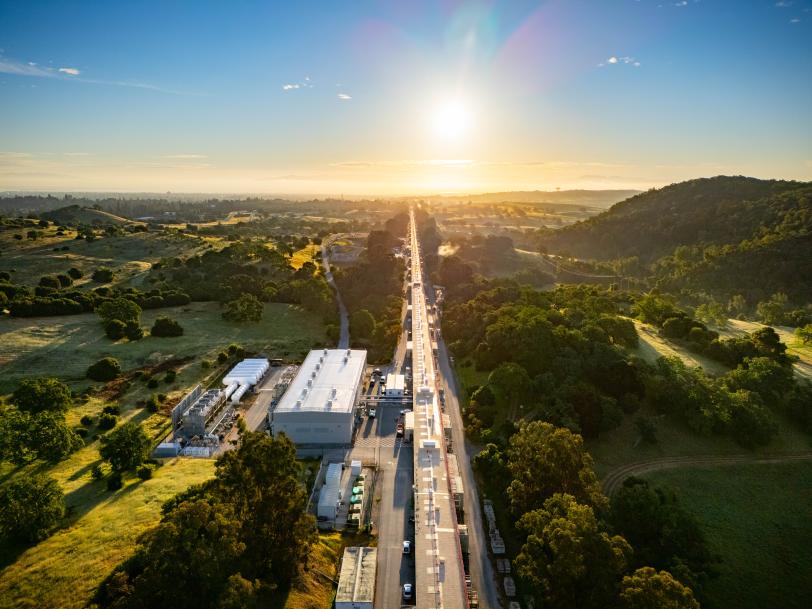
“SLAC hosts two of the biggest scientific data producers on Earth,” Chris Tassone, SLAC associate lab director of Energy Sciences, said. “The Linac Coherent Light Source [LCLS] and the NSF-DOE Vera C. Rubin Observatory will collect data at speeds and volumes that humans cannot process in real time.”
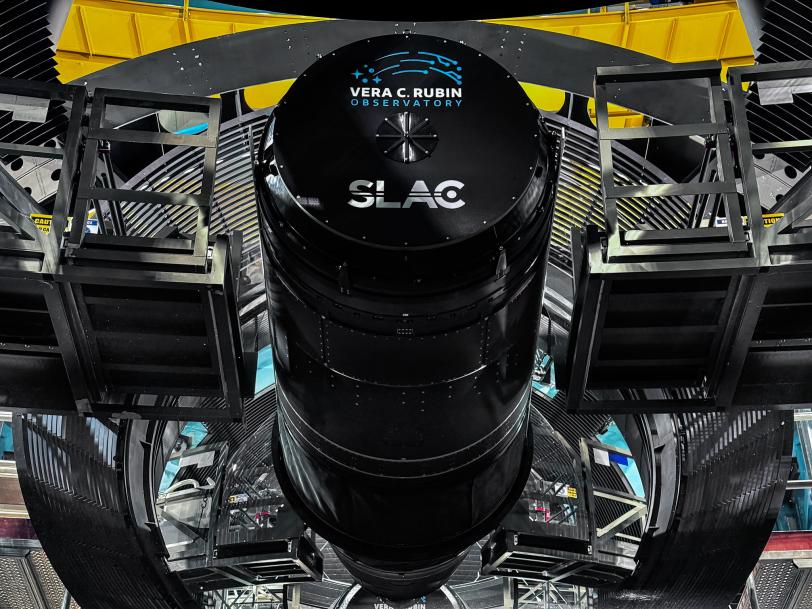
During the Legacy Survey of Space and Time (LSST), Rubin Observatory will generate about 7 million science alerts per night. Over the 10-year survey, Rubin data will add up to 30 petabytes – more than any other optical astronomical survey to date – helping scientists obtain new observations of billions of stars and galaxies, and providing insights into the nature of dark matter, dark energy and the origins of the universe.
Ultrafast X-ray experiments at SLAC’s LCLS generate unprecedented views of electrons, atoms and molecules in motion, driving scientific discovery in materials, chemistry and biology. X-ray pulses arriving at up to a million times per second will generate up to 40 terabytes of data in as much time. Left unprocessed, this will add up to zettabytes (1 billion terabytes) of data each year. To put that in perspective, the world’s 30 billion smart devices connected to the cloud today produce 100 zettabytes.
In this era of rapid and expansive data collection, AI will necessarily augment the way science is done – the same way the microscope or the telescope has accelerated breakthroughs, Tassone said.
“The need to grapple with such enormous and varied datasets and the instruments that produce them will feed the AI revolution and lead to future technologies with broad societal benefits,” said Lisa Bonetti, associate lab director for Technology Innovation and head of SLAC’s Integrated Scientific and Data-Intensive Computing (ISDCI) Initiative.
Expertise and strong partnerships in many areas of science and technology at SLAC are now helping advance the Genesis Mission goal of transforming the way America does science and engineering to double productivity and impact within a decade. Genesis Mission projects are pulling together teams across national labs, academic institutions and industry. SLAC’s close relationship with Stanford and other universities, and its ties to the national lab complex and Silicon Valley are fueling its progress as a Genesis Mission partner.
Here are some of the ways SLAC is contributing.
Building the platform
One of the most ambitious goals of the Genesis Mission is to build an integrated platform that connects supercomputers, experimental facilities, AI tools and datasets across the country. The SLAC Shared Science Data Facility (S3DF) – a hub for scientific data from more than two dozen DOE Office of Science projects and home of Rubin Observatory’s U.S. Data Facility – is a key partner in the American Science Cloud (AmSC). AmSC is the infrastructure – hardware and software – for the platform on which partners can make data AI-ready, train AI models, search for and use previously developed AI models, and analyze data. S3DF also supports the SLAC Sandbox for Streaming AI (S3AI) interface to AmSC and the broader DOE ecosystem. S3AI allows scientists and engineers across the DOE complex and in collaboration with private sector partners to evaluate and benchmark unique combinations of hardware and trained AI models to continuously process data at ultrahigh rates in real or near-real time.
Teams at SLAC are also partnering on efforts to ensure AmSC can meet the needs of applications that involve real-time streaming prediction and control for facilities – essential for particle accelerators, which must continuously adapt to changes while operating. SLAC researchers are working on agentic AI and digital twin workflows for accelerators and light and neutron sources to enable improved operation of accelerator-based scientific facilities and analysis of light source experiment data. “The American Science Cloud gives us a unified platform where AI models can run at scale, in real time, across all computing resources, locally or at other national labs. This platform will enable scientific discoveries to get published much faster,” Pamela Schleissner, SLAC research associate at LCLS, said. “What used to take days or weeks can now happen in real time – turning measurements into insight while the experiment is still running.”
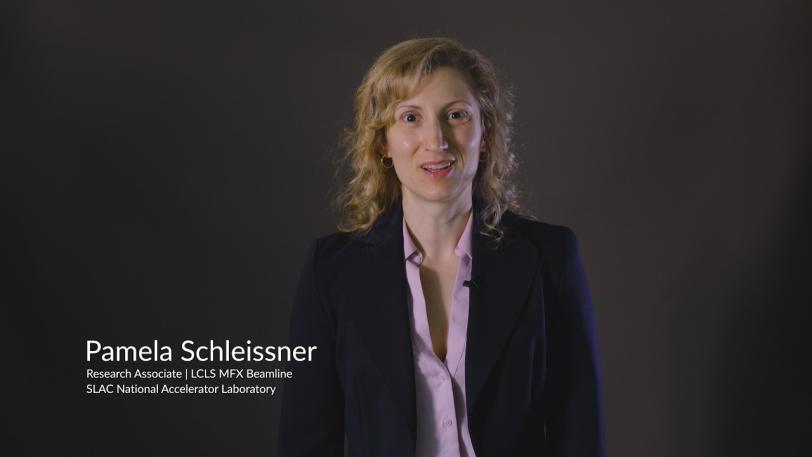
How SLAC and LCLS Are Using the American Science Cloud
Key to project names
ISAAC
Integrated Scientific Agentic AI for Catalysis
SLAC’s advanced X-ray and ultrafast science tools are part of the DOE network of facilities that allow energy sciences researchers to peer deep into atomic and molecular dynamics of materials and chemistry. Genesis Mission projects at SLAC are now using agentic AI to accelerate discovery in this field that underpins American manufacturing. SLAC is leading a project (ISAAC) that connects complementary data from light sources and neutron facilities across the country with theory and scientific literature to advance catalysts, which are essential to modern manufacturing. “With ISAAC, we can now reason across the entire body of evidence at once, accelerating catalysis discovery in addressing the grand challenges of selectivity, efficiency and durability,” said Dimosthenis Sokaras, SLAC senior scientist.
Key to project names
SYNAPS-I
America’s AI revolution transforms scientific discovery at the speed of light
The lab is also partnering on a project (SYNAPS-I) that allows scientists to rapidly identify anomalies in materials and biological samples that can lead to flaws – like a crack in a semiconductor device or a misfolded protein – that impact performance. These anomalies can be hidden in massive collections of scientific images, making them hard to detect. SLAC’s synchrotron facility is designing “one-click” 3D images of materials, such as battery cathodes, with AI models right at the X-ray experiment. “This will speed up the data processing and analysis of imaging data from months to minutes using AI on DOE computing facilities,” Johanna Nelson Weker, SLAC lead scientist at the Stanford Synchrotron Radiation Lightsource (SSRL) said. “It will allow users to leave the beamline with publication-ready results.”


Key to project names
MAIQMag
Multimodal AI for 2D Quantum Magnets
SLAC is also partnering on a project (MAIQMag) related to materials for future quantum technologies, specifically those whose magnetic properties are determined by quantum mechanics. Because existing databases and models of these materials haven’t fully captured the complexity of their magnetic structures, a team including SLAC researchers is creating a database for 2D quantum magnets that will provide more reliable calculations and train or fine-tune models. The project also aims to significantly reduce the time it takes to model quantum systems, providing a scalable and transferable platform for detailed understanding of quantum materials. “The effort positions AI as a transformative tool in condensed matter physics, integrating theory, simulation and experiment within a unified platform that will answer questions in real time,” Matthias Kling, professor of photon science and director of the Stanford PULSE Institute at SLAC, said.
Fusion energy
SLAC researchers are also contributing to American Science Cloud projects that are building AI models to enable autonomous stabilization of magnetic confinement fusion energy and laser and target control and optimization for inertial fusion energy. The team recently demonstrated how AI models can predict when a tokamak fusion reactor was becoming unstable to pull the plasma automatically back into stabilization. “AI models can push the speed of predictions and decisions much further than has traditionally been viewed as feasible,” Ryan Coffee, SLAC senior scientist said. “When autonomous decisions occur significantly faster than the plasma fluctuations, the impossible becomes possible.”
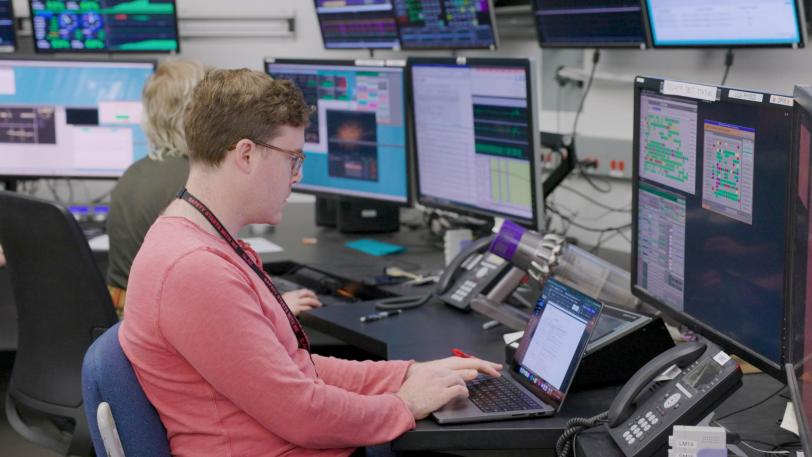
Rethinking AI for the edge
Key to project names
AIMS-LEAF
AI-driven Multimodal Science for Linking fEnotype to Phenotype
One of the grand challenges in modern biology is understanding how genetic information influences the physical expression of genes – the link between genotype and phenotype. It’s a question that is foundational for advancing bioenergy and biotechnology solutions. A SLAC-led Genesis Mission project (AIMS-LEAF) aims to employ AI tools to integrate data collected with various techniques across multiple spatial scales, building models that connect genetic modifications in plants to their phenotypic expressions. “The long-range goal is to enable AI frameworks for predictive modeling of plant processes under a range of environmental conditions, which could aid future research in resilient agriculture and biosystems design,” said Sam Webb, SLAC lead scientist.
Key to project names
LAMBDA
Lakehouse-Enabled AI Ready Multi-Modal Bioimaging Data Architecture
By unifying structural biology data across the nation’s scientific facilities, another project (LAMBDA) will transform how researchers discover, integrate and analyze datasets from different methods of study. “Structural biology experiments at DOE facilities are conducted using photons, neutrons or electrons – providing complementary information,” said Aina Cohen, SLAC senior scientist. “The challenge is integrating the datasets, which currently exist in silos. That integration will accelerate discoveries in biology, bioenergy and critical minerals.”
Key to project names
MOAT
Multi-office Particle Accelerator Team
Particle accelerators power advances in research, industry and medicine. These incredibly complex machines have many components and information systems that must be managed simultaneously. SLAC is a key partner in a project (MOAT) aimed at improving the way accelerators are operated and designed across the DOE. SLAC will help build tools to make it easier to develop and deploy adaptive digital twins to monitor and predict accelerator performance – as well as agentic AI-driven tools for interfacing with many resources commonly used during operations, such as electronic logbooks, machine schedules, tech reports, and optimization or control algorithms. “Digital twins and agentic workflows are important avenues to enable future capabilities in particle beam production and automated accelerator operation,” said Auralee Edelen, SLAC lead scientist. The project will also use similar tools to change the way future accelerators are designed. “This project brings together participants from across the DOE to develop methods and tools that can be used at different accelerators and leverage insights across them,” Edelen said.
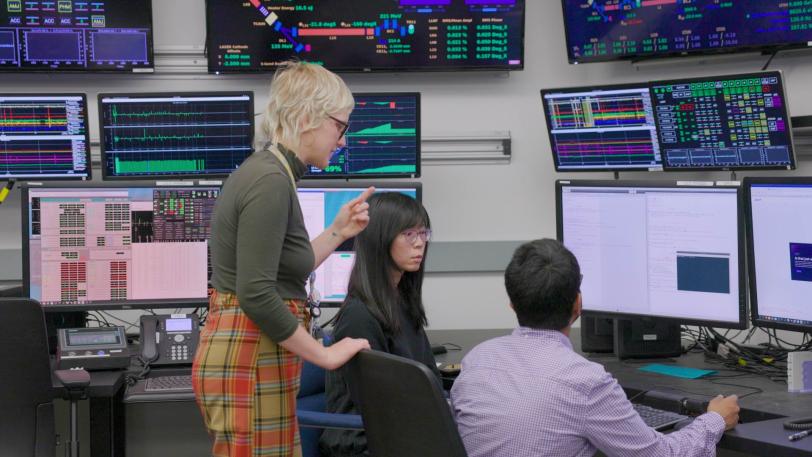
How SLAC Is Using AI to Improve Particle Accelerator Operations
Key to project names
CM2U
Critical Minerals and Materials to Unlock Supply
Critical minerals and materials (CMMs) are an important resource for magnets in motors, turbines, generators, batteries, semiconductors, microelectronics and nuclear reactors, among other things. SLAC is a partner in a Genesis Mission project (CM2US) that aims to model the critical minerals and materials supply chain from geologic sources to applications to support real-time decision making, secure U.S. technological leadership and build a self-sufficient future. “This project will revolutionize how we discover, develop and produce CMMs,” Steve Eglash, director of Applied Energy at SLAC, said. In addition, the project seeks to discover alternatives to rare-earth materials for magnets, batteries and other applications.
Key to project names
Q2C
Quarks to Cosmos
Exploration of fundamental particles and forces of nature has led to countless discoveries that are foundational to human knowledge and technological advances. SLAC is collaborating on Genesis Mission projects that will use AI to shed light on some of the biggest mysteries of physics, including the nature of dark matter, the invisible matter that makes up most of our universe. One project (Q2C) will use AI to expose hidden connections across disparate large-scale data sets, enabling new types of discoveries in fundamental physics. “We are working on using agentic AI to bridge currently disconnected efforts to study dark matter, from experiments carried out at particle colliders to surveys of the Milky Way and the greater universe, eventually including data from DOE cosmological surveys like DESI [Dark Energy Spectroscopic Instrument] and LSST,” Ben Nachman, Stanford associate professor of particle physics and astrophysics, said.
Key to project names
TREASURE
Tokenized Representations for Energy-frontier AI Searches via Understanding and Reasoning
SLAC researchers are also co-leading a Genesis Mission effort (AI Universe) to transform and combine data from Rubin, DESI, and other cosmology experiments to enable astrophysicists to train the next generation of large-scale, data-driven AI models of the universe. Others are collaborating on a project (TREASURE) that will similarly develop AI-ready data to enable training large-scale AI models for high energy physics research at particle colliders. These foundational models have the potential to assist researchers in making precision measurements and identifying patterns in vast datasets relating to some of the smallest and largest structures in nature. Another project (Knowledge Extraction) will use AI agents to resurrect data and documentation of legacy experiments to enable new discoveries with AI and modern insights.
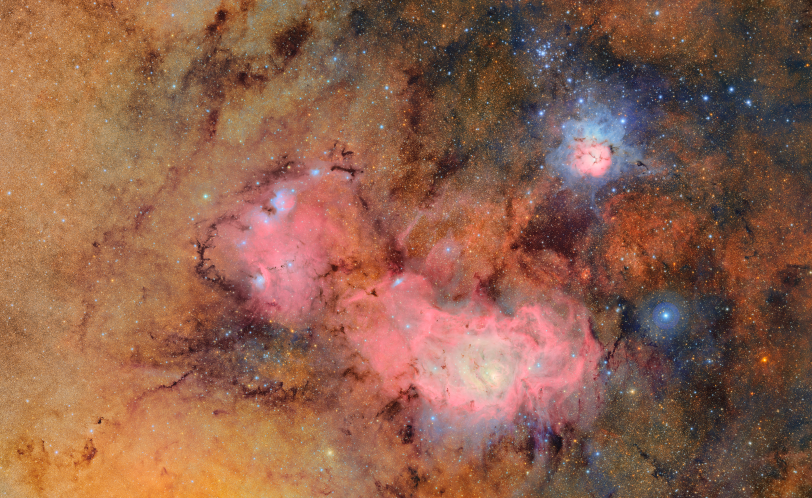
Key
AXESS
Specs-to-Silicon Microelectronics in Extreme environments for Transformative Science
One Genesis Mission collaboration (AXESS) aims to accelerate the design of microelectronics for extreme environments – such as cryogenic temperatures, high radiation levels and ultrafast operating conditions – by leveraging AI and machine learning across the entire process of chip design, according to Ryan Herbst, SLAC chief engineer. “SLAC is working with many other national labs and industry partners to build a unified ecosystem of foundational models, agentic design tools, and curated datasets to dramatically speed up the path from material properties to working silicon.”
Genesis Mission work underway at SLAC today is leveraging the energy and enthusiasm spurred by the DOE initiative to break new ground and turn ideas into solutions, according to SLAC Deputy Director of Science and Technology Alberto Salleo. “It will no doubt evolve as quickly as the landscape of AI for science, fueled by the ambition of fast-paced discoveries, solutions to pressing problems and partnerships that make it all possible,” he said.
The Genesis Mission is a U.S. Department of Energy initiative. Genesis Mission projects at SLAC are supported by the DOE Office of Science. LCLS and SSRL are DOE Office of Science user facilities. Read more about SLAC and the Genesis Mission at the ISDCI website.
For media inquiries, please contact media@slac.stanford.edu. For other questions or comments, contact SLAC Strategic Communications & External Affairs at communications@slac.stanford.edu.
About SLAC
SLAC National Accelerator Laboratory explores how the universe works at the biggest, smallest and fastest scales and invents powerful tools used by researchers around the globe. As world leaders in ultrafast science and bold explorers of the physics of the universe, we forge new ground in understanding our origins and building a healthier and more sustainable future. Our discovery and innovation help develop new materials and chemical processes and open unprecedented views of the cosmos and life’s most delicate machinery. Building on more than 60 years of visionary research, we help shape the future by advancing areas such as quantum technology, scientific computing and the development of next-generation accelerators.
SLAC is operated by Stanford University for the U.S. Department of Energy’s Office of Science. The Office of Science is the single largest supporter of basic research in the physical sciences in the United States and is working to address some of the most pressing challenges of our time.
Related stories